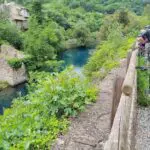

There is a kind of holiday that moves at just the right pace: two e-bikes, a few unhurried days, and a string of stone villages waiting to be connected like pearls on a necklace. The Umbrian Valley is made for exactly this.
Discovering Umbria’s villages by bike is the most natural way to embrace slow travel: you arrive at a pace that allows you to notice everything, park your bike beneath a fourteenth-century gateway, and explore on foot.
In this article, we guide you along the route from Assisi to Spoleto, with everything you need to make the journey a reality: the cycle path that forms its backbone, the villages to discover along the way, and practical advice to help you prepare for the one thing that might catch you by surprise here: the climbs leading up to the historic centres.
Why cycling through Umbria's villages is perfect for slow travel
There is a reason why Umbria is such a wonderful destination for people who love cycling without worrying about covering as many kilometres as possible. It is a region where history is concentrated in its villages, and those villages are all within easy reach of one another.
One in three Umbrian villages belongs to the national I Borghi più Belli d’Italia (Italy’s Most Beautiful Villages) association. More precisely, Umbria has 33 officially recognised villages, and four of them — Spello, Bevagna, Montefalco and Trevi — lie along the route we are about to explore.
This is not simply a statistic for record collectors. It means you can spend half a day cycling and pass through more masterpieces of historic town planning than you might visit in a week elsewhere.
This remarkable concentration is also reflected in tourism figures. According to ISTAT’s analysis of cultural tourism, 82.6% of overnight stays in Umbria take place in municipalities known for their cultural heritage, the second-highest percentage in Italy.
For cyclists, this means that culture is not something you have to go looking for: it is part of the everyday landscape. You stop for a coffee and find yourself in front of a perfectly preserved medieval square.
And then there is the Umbrian Valley, the flat corridor connecting Assisi to Spoleto along the foot of the surrounding hills.
This is what makes the whole experience possible: a broad, gentle valley floor where cycling feels effortless, while picturesque villages rise on the hillsides all around you, never too far away and never too high to reach. You cycle through the flat countryside and climb whenever you feel like it.
It is no coincidence that Lonely Planet describes Umbria as a quieter, less-travelled destination, where slowing down is still possible. That is exactly how this itinerary should be experienced: as a story unfolding one chapter at a time, rather than a strict schedule to follow.
If you are looking for a complete overview — when to visit, how to get around and what type of trip to choose — you will find everything in our guide to cycling tourism in Umbria. Here, however, we focus on the villages themselves and the route that connects them.
The Spoleto–Assisi cycle path: the backbone of the route
The good news for anyone wanting to explore Umbria’s villages by bike is that there is no need to create a route from scratch: one already exists, and it is perfectly suited to the experience.
The Spoleto–Assisi Cycle Path is part of the regional sustainable mobility network and, at its southern end, even connects with the route of the former Spoleto–Norcia railway. It is the main route around which you can build your entire cycling holiday.
According to information provided by the Municipality of Spoleto, the route is approximately 50 km long, almost entirely flat, and predominantly paved.
It passes through the municipalities of Spoleto, Campello sul Clitunno, Trevi, Montefalco, Foligno, Bevagna, Cannara and Assisi.
In 2015, it won the Italian Green Road Award, often described as Italy’s “cycling tourism Oscar”.
This recognition gives you a good idea of what to expect: not a technical trail designed for experienced mountain bikers, but a green route created to help travellers enjoy the landscape.
We describe the journey from north to south, starting in Assisi and finishing in Spoleto, because we like the idea of beginning with the most famous destination and building towards a memorable finale.
However, the route is bidirectional, so you can just as easily travel in the opposite direction.
One useful detail before setting off: Spello, which many travellers expect to find directly on the main route, actually lies a short distance away from the official cycle path, near Foligno.
It is well worth the brief detour, and we will explain why shortly.
Technical details for cyclists who like the numbers
If you are an experienced cyclist and want to know exactly what to expect before booking, here is a quick overview.
Main route length: approximately 50 km, according to the Municipality of Spoleto.
Elevation gain: minimal along the valley floor. Most of the climbing comes from optional detours up to the historic centres, which are located on the surrounding hills.
Surface: predominantly paved, making the route suitable for trekking bikes and city bikes, not just mountain bikes.
Award: Italian Green Road Award 2015.
You can comfortably complete the main route over a long weekend if you travel directly, or spread the journey over several days if, as we recommend, you take time to explore each village.
The real variable is not the distance: it is how much time you want to spend off the bike.
A Cycling Itinerary Through Umbria's Villages: Step by Step
Now it is time to get on the saddle. Travelling from Assisi towards Spoleto, the string of villages unfolds as follows.
Cycling in Assisi: Starting from a UNESCO World Heritage Site
The journey begins on a high note, in every sense. Assisi has been a UNESCO World Heritage Site since 2000, together with the Basilica of Saint Francis and other Franciscan sites. This extraordinary collection of monuments has made the city a spiritual destination known throughout the world.
It is worth arriving the day before your cycling adventure and spending an entire morning exploring Assisi on foot before setting off.
There is, however, one particularly important thing to understand: cycling in Assisi means dealing with the climb to its historic centre.
The town is perched on a hillside, and the gradients leading towards the Basilica and the Rocca fortress are demanding. Tackling them on a traditional bicycle loaded with luggage can turn your arrival into a rather exhausting experience.
This is the main reason we recommend an e-bike for this itinerary. With electric assistance, the steep climb into the heart of Assisi becomes a minor detail rather than an obstacle.
If you do not have your own, our e-bike rental service provides an easy solution before you set off.
This is more important than it might seem: the e-bike is what makes a journey like this truly enjoyable, transforming Umbria’s hills from a limitation into an invitation to explore.
From Assisi, the cycle path descends gently towards the valley floor.
A note for travellers interested in pilgrimage routes: this is also the heart of Franciscan territory. If you would like to combine your cycling holiday with the region’s spiritual heritage, take a look at our dedicated article about cycling the Way of Saint Francis.
Spello: The Detour That Makes the Journey
Shortly after leaving Assisi, before heading fully into the valley, it is worth taking a detour towards Spello.
It is not directly on the official route, but the extra kilometres are richly rewarded.
Spello has been awarded the Orange Flag by the Touring Club Italiano, a distinction given to small inland towns for the quality of their hospitality and the preservation of their heritage.
In Spello’s case, the Touring Club particularly highlights the outstanding urban character of its historic centre.
It is also one of Italy’s Most Beautiful Villages, the first of four villages with both recognitions that you will encounter along the way.
In practice, Spello is a maze of narrow streets built from pink stone, winding uphill and decorated with flowerpots and colourful blooms at every corner.
The highlight of the year is the Infiorate del Corpus Domini, when the streets are covered with elaborate floral carpets, creating genuine works of art made entirely from flower petals.
Yet even outside festival season, Spello remains one of Umbria’s most photographed villages.
Leave your bike near the entrance and explore on foot: it is the best way to experience it.
Foligno: The Hub of the Valley
Back on the main cycle path, you arrive in Foligno, where the atmosphere changes.
Foligno is the largest and liveliest town along the route, a city on the plains and an important road and railway junction.
It is not the picture-postcard village you might expect, but rather the practical hub that holds the journey together.
This makes it the perfect place for a useful stop: a proper lunch, a quick check of your tyres, or a visit to a pharmacy if needed.
From here, you enter the more intimate heart of the Umbrian Valley, where villages become smaller and closer together.
Cycling in Bevagna: A Perfectly Preserved Medieval Square
From Foligno, just a short, easy ride across the valley brings you to Bevagna.
It is one of those places that makes you slow down without even realising it.
Bevagna holds two prestigious distinctions: it is one of Umbria’s 33 villages included among Italy’s Most Beautiful Villages and one of the region’s 10 towns awarded the Touring Club Italiano’s Orange Flag.
Two recognitions, twice the appeal.
At its heart lies Piazza Silvestri, one of Italy’s best-preserved medieval squares.
Its Romanesque churches, town hall and fountain have remained almost unchanged for eight centuries.
Cycling to Bevagna is one of those stages where the bike almost becomes unnecessary: you park it and happily lose yourself among the streets.
If you visit in early summer, you may experience the Mercato delle Gaite, a historical festival that brings the village back to the Middle Ages, with traditional artisan workshops operating as they once did.
But even on an ordinary morning, the quiet atmosphere of Piazza Silvestri is enough to justify the detour.
Cycling in Montefalco: The Balcony of Umbria and Sagrantino Wine
From Bevagna, the route climbs towards a village locally known as the Ringhiera dell’Umbria, or “Balcony of Umbria”: Montefalco.
The nickname says it all.
Perched high above the countryside, Montefalco overlooks the entire valley like a panoramic balcony.
It is also the stop that adds another dimension to the experience: wine.
Montefalco is the home of Sagrantino, the celebrated red wine produced from a native grape variety that has made this corner of Umbria famous among wine lovers around the world.
Cycling to Montefalco does require another little effort.
The historic centre sits at the top of the hill, and the final climb is noticeably steep.
With an e-bike, you can tackle it with a smile. On a traditional bike, be prepared to work a little harder.
Once you reach the top, you will discover medieval walls, beautiful frescoes and vineyards stretching towards the horizon.
Montefalco is another village with both prestigious recognitions: Italy’s Most Beautiful Villages and the Orange Flag.
And if you find yourself developing a passion for its wines, you will be pleased to know that we will soon dedicate an entire article to the Sagrantino grape harvest and local wineries.
For now, we will simply raise a glass as we pass through.
Trevi: Olive Oil, the Clitunno Springs and a Flavour You Will Not Find Elsewhere
Descending towards the valley floor and continuing south, you arrive in Trevi, a village clinging to a hillside densely planted with olive trees.
Here, the star attraction is extra virgin olive oil, considered among the finest in Italy.
The olive-growing landscape surrounding the village is an attraction in itself, with its orderly rows of silvery-green trees.
Trevi also holds both the Touring Club Italiano’s Orange Flag and a place among Italy’s Most Beautiful Villages, making it the fourth village with this double recognition along our route.
But there is a special treat that food-loving cyclists should not miss.
Near the famous Clitunno Springs, local farmers grow sedano nero di Trevi, or Trevi black celery, a rare vegetable protected by the Slow Food Presidium.
Today, it is cultivated by just four producers in the damp plots known as canapine, close to the springs celebrated by nineteenth-century poets such as Byron and Goethe.
It is the kind of flavour you can only discover here, during a few weeks of the year.
And it gives real meaning to the idea of slow travel: some things can only be experienced when you happen to pass by on your bike, with enough time to stop and ask about them.
Cycling in Spoleto: A Grand Finale Between the Ponte delle Torri and the Festival
Finally, you reach Spoleto, the southern terminus of the cycle path.
It is the perfect finale because Spoleto brings together everything you have experienced along the way, on an even grander scale.
There is the imposing Rocca Albornoziana fortress overlooking the city, the Cathedral, the steep medieval streets and, above all, the Ponte delle Torri, the monumental aqueduct spanning the valley that has become the town’s most recognisable landmark.
Exploring Spoleto by bike is best done at a leisurely pace.
The historic centre is perched on a hillside, but the city’s mechanised transport systems and, once again, an e-bike make it easier to reach the upper part without becoming exhausted.
If you are lucky enough to visit between late June and early July, you will find the city transformed by the Festival dei Due Mondi, one of Europe’s most prestigious performing arts festivals.
During this period, Spoleto comes alive with theatre, music and dance.
It is a reminder that Umbria’s historic villages are not static postcards: they are living places that change character with the seasons.
From here, travellers who want to continue cycling can follow the former Spoleto–Norcia railway route towards the mountains.
But that really is another story.
Practical Tips for Your Cycling Tour Through Medieval Villages
One of the best things about this itinerary is that you can choose how challenging you want it to be.
The valley itself is easy to cycle through. It is the villages perched on the surrounding hills that demand a little extra effort.
Here is how to prepare.
An e-bike is not a luxury: It is the key to exploring the villages
We keep emphasising this because it is what separates a relaxing holiday from a ride spent gritting your teeth.
The Umbrian Valley floor is flat and accessible to almost everyone, but nearly all the historic centres — especially Assisi, Montefalco and Spoleto — are perched on hills with demanding final climbs.
These ascents are the only real challenge of the itinerary.
With an electric-assist bike, those steep stretches become easy to manage, leaving you with plenty of energy for what really matters: walking through the picturesque streets and exploring the villages.
That is why our recommendation is simple: choose an e-bike, particularly if you want to enjoy every stop without exhausting yourself.
If you cannot bring your own, our e-bike rental service has you covered.
Where to stay: bike hotels in the villages
Staying overnight in or near the villages completely transforms the experience.
It means enjoying these places after the tour buses have left, during the blue hour when only local residents and swallows remain.
That is why we work with a carefully selected network of cyclist-friendly accommodation providers, offering secure bike storage, hearty breakfasts and e-bike charging facilities.
You can find them among our partner bike hotels, located throughout the valley so you can divide your itinerary into stages that suit your preferences.
Travel Light: Luggage Transfers
One of the less obvious secrets to a truly enjoyable cycling holiday is riding without the weight of your luggage.
With our luggage transfer service, your bags will be waiting for you at your next hotel while you enjoy the day’s ride on a lighter bike.
And, as you might imagine, those climbs up to the villages become much easier too.
When to Go
The best time to cycle through Umbria’s villages is spring, from April to mid-June.
The days are long, the olive groves are green, the temperatures are ideal, and the events calendar is packed with attractions, including Spello’s Infiorate, Bevagna’s Mercato delle Gaite and Spoleto’s Festival dei Due Mondi around the beginning of July.
The second ideal period is autumn, from September to October, when the Sagrantino grape harvest and olive picking take place, and the countryside is bathed in beautiful golden light, perfect for photography.
Cycling is still possible during the height of summer, but it is advisable to set off early in the morning and avoid the hottest hours of the day.
Ready to Set Off? Let's Create Your Tailor-Made Itinerary
At the end of the journey, what stays with you is a phone full of photographs of medieval gateways and a notebook filled with the names of local wines.
And above all, one wonderful feeling: not having had to worry about a thing.
That is exactly the point.
Discovering Umbria’s villages by bike becomes easy when someone has already taken care of all the details for you: where to stop each day, how to reach Assisi without struggling uphill, where to stay in the right village, and how to have your luggage transported to your next destination.
This itinerary is the starting point. We design the actual journey together.
If you would like to begin with a tried-and-tested itinerary, take a look at our “In the Heart of Umbria” tour on our cycling tours page.
And if you prefer a journey tailored to your own pace and interests, tell us what you have in mind.
We will take care of everything else, creating a fully organised, hassle-free experience.
Request your tailor-made cycling itinerary.
FAQ – Cycling through Umbria's villages
How Long Is the Spoleto–Assisi Cycle Path?
The Spoleto–Assisi Cycle Path is approximately 50 km long and runs almost entirely across the flat Umbrian Valley, with a predominantly paved surface, according to the Municipality of Spoleto.
In 2015, it won the Italian Green Road Award.
It connects Spoleto and Assisi, passing through Campello sul Clitunno, Trevi, Montefalco, Foligno, Bevagna and Cannara, and can be cycled in either direction.
Do You Need an E-Bike to Explore Umbria's Villages?
Not for the cycle path itself: the valley floor is flat and accessible to most cyclists.
However, an e-bike becomes extremely useful when climbing to the historic centres. Assisi, Montefalco and Spoleto are all perched on hills with demanding uphill stretches.
With electric assistance, these climbs become much easier to manage.
It is our recommendation, particularly for travellers who want to enjoy the journey without excessive physical effort.
If you do not have your own e-bike, you can use our rental service.
Which Villages in Umbria Have the Orange Flag Award?
Ten villages in Umbria have received the Touring Club Italiano’s Orange Flag award: Bevagna, Città della Pieve, Montefalco, Montone, Nocera Umbra, Norcia, Panicale, Spello, Trevi and Vallo di Nera.
Four of them — Bevagna, Montefalco, Spello and Trevi — are located along the Assisi-to-Spoleto itinerary and are also included among Italy’s Most Beautiful Villages.
Why Is Assisi a UNESCO World Heritage Site?
Assisi has been included on the UNESCO World Heritage List since 2000, together with the Basilica of Saint Francis and other Franciscan sites.
The designation recognises the artistic and spiritual importance of a monumental heritage that, beginning with the figure of Saint Francis, has profoundly influenced European art and religious history.
It is a destination worth exploring on foot as well as the starting point for your cycling adventure.
When Is the Best Time to Cycle Through Umbria's Villages?
The best times are spring, from April to early summer, and autumn, from September to October.
Both seasons offer pleasant temperatures and beautiful landscapes: flowers in bloom and Spello’s Infiorate in spring, and the Sagrantino grape harvest and olive picking in autumn.
Summer cycling is also possible if you start early in the morning.
It is also a wonderful time for local events, as Bevagna’s Mercato delle Gaite and Spoleto’s Festival dei Due Mondi bring the valley to life around the beginning of July.
Sources cited
- I Borghi più Belli d'Italia in Umbria - https://www.borghipiubelliditaliainumbria.it/chi-siamo
- Istat: Il turismo culturale in Italia - https://www.istat.it/it/files/2023/10/Il-turismo-culturale-in-Italia_Ebook.pdf
- Lonely Planet: Umbria - https://www.lonelyplanet.com/destinations/italy/umbria-and-le-marche
- Regione Umbria: Rete sentieristica e ciclabile- https://www.regione.umbria.it/-/rete-sentieristica-e-ciclabile
- Comune di Spoleto: Itinerario ciclabile Spoleto-Assisi -https://oldsite.comune.spoleto.pg.it/turismoecultura/itinerari/itinerari-in-bicicletta/itinerario-ciclabile-spoleto-assisi
- UNESCO World Heritage Centre: Assisi, Basilica di San Francesco e altri siti francescani (n. 990) - https://whc.unesco.org/en/list/990
- Touring Club Italiano: Spello - https://www.touringclub.it/destinazioni/spello
- Touring Club Italiano: Bandiere Arancioni - https://www.touringclub.it/notizie/bandiere-arancioni/quattro-nuove-bandiere-arancioni-e-277-confermate-sono-281-i-borghi-premiati-dal-touring-in-tutta-italia
- Fondazione Slow Food: Presidio Sedano nero di Trevi - https://www.fondazioneslowfood.com/it/presidi-slow-food/sedano-nero-di-trevi